phydras
Particle simulation, from your CAD

From your CAD to simulation, in minutes.

Prototype a detector, plan a test beam, check a dose. Bring the model you already have, add materials, sources and physics, watch real events in seconds, and take away a project that builds and runs on its own.

Your CAD stays your CAD. The physics stays the physics you trust. Phydras connects the two.

Underneath, Geant4: the toolkit that has simulated particles through matter for over twenty-five years, from the LHC to hospitals and spacecraft.

Any model in

Bring what you have.

A STEP from any CAD, the GDML of a geometry you already simulate, a mesh, or a part drawn right here. Meshes turn back into exact boxes, tubes and prisms wherever they can.

STEPFusion, SolidWorks, Onshape, CATIA, Inventor, FreeCAD
GDMLa geometry you already run, volumes inside volumes
STL · OBJmeshes, scans, Blender
Drawn heresketches, extrusions, booleans, arrays
Design

Sketch it, shape it, build it.

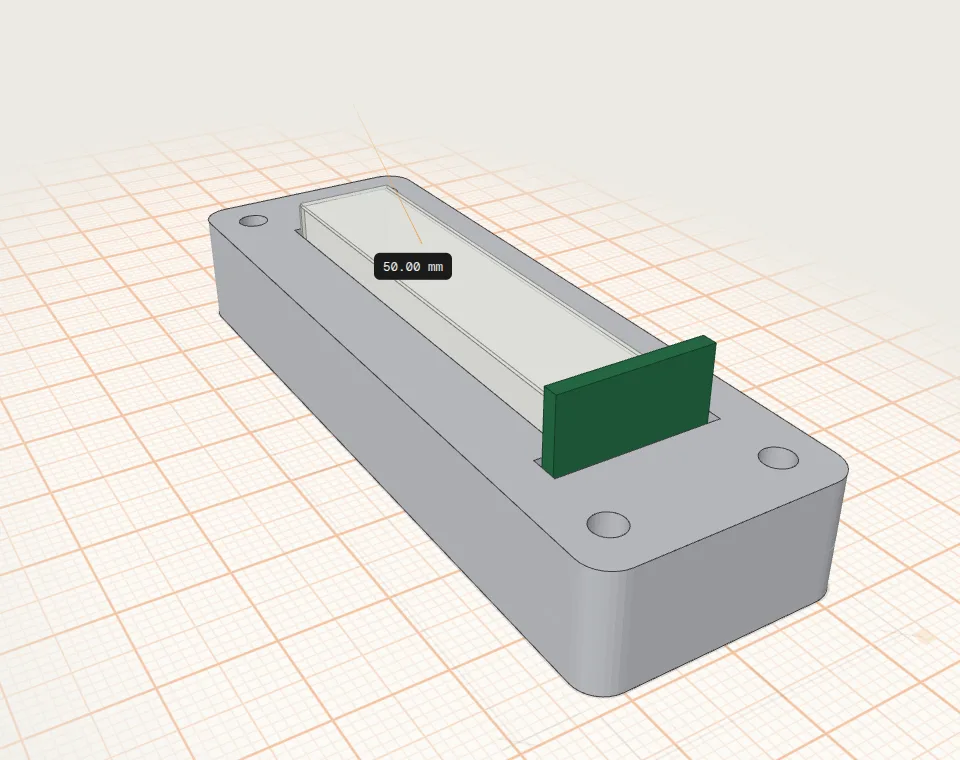
A profile on paper becomes a part: extrude it, cut its pocket, then build the detector into it. Every size is a number you can type, and every part is a real volume of the simulation.

  1. HolderAl 6061 · 78 × 26 × 12 mm
  2. ScintillatorEJ-200 · 10 × 10 × 50 mm
  3. WrappingPTFE · 0.32 mm, folded round
  4. Optical greaseEJ-550 · 0.05 mm
  5. SiPM on its boardS13360-3050PE · FR-4
Dose

Dose where it lands.

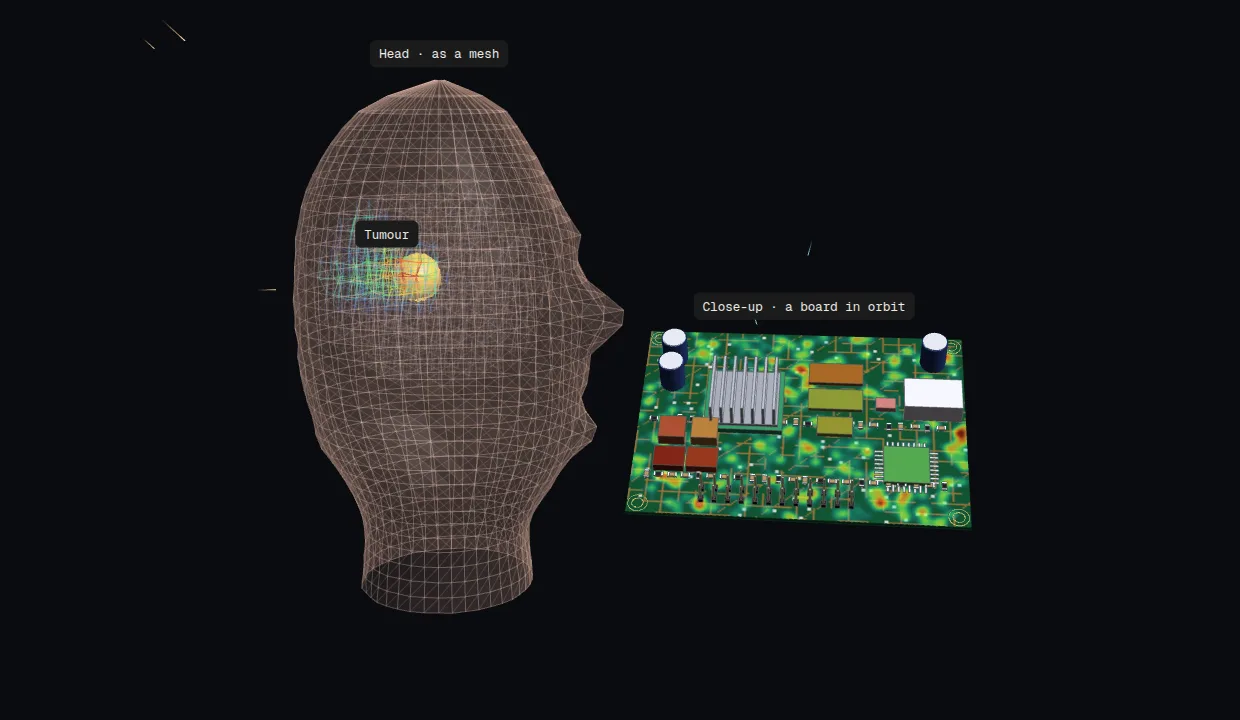
The same tool for a patient and for a circuit: three proton fields that meet in a tumour inside a meshed head, and the dose a crowded board takes in orbit, part by part.

Tumour against the brain–
Hottest part on the board–
lowdose

An animation of the idea. In the app the fields, the anatomy and the board are yours, and the dose comes from Geant4 with its statistical error.

Moon and Mars

Test tomorrow's bases today.

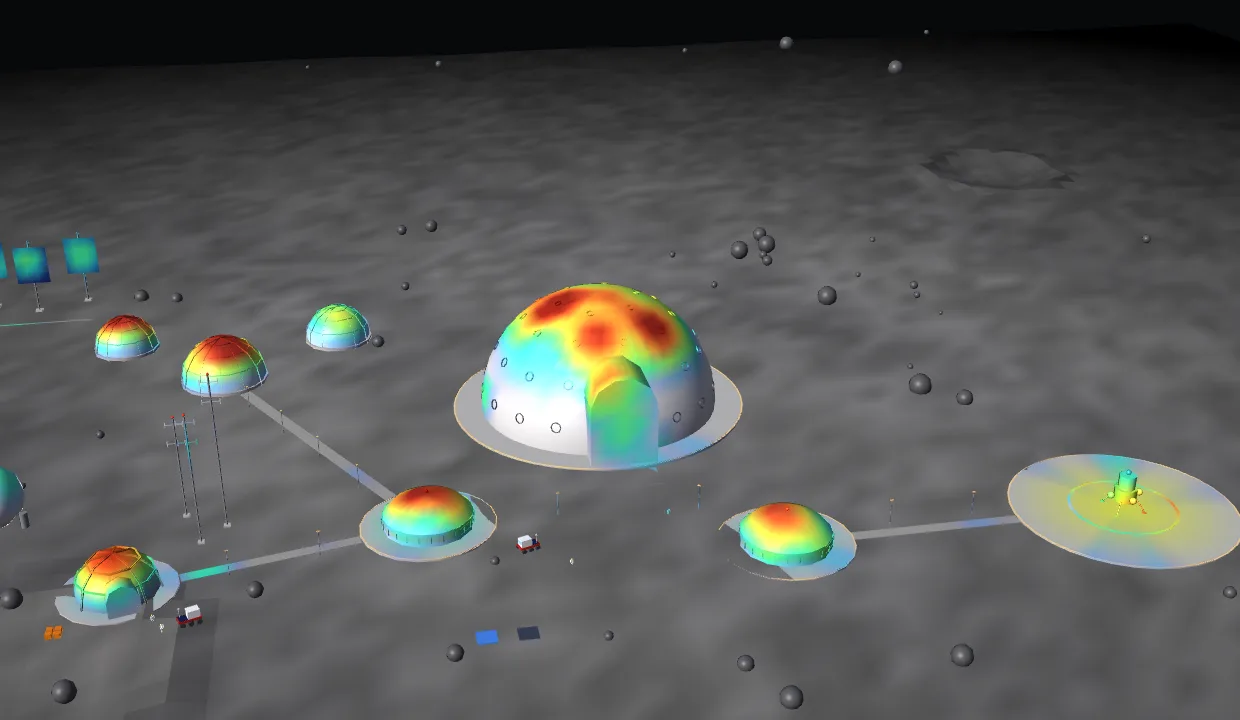
Simulate how cosmic rays strike the structures planned for the Moon and Mars, and see where their energy is left. This is our own lunar base, modelled in Phydras: 848 volumes.

Cosmic rays0
Most struck–
  • GCR at 1 AU
  • lunar regolith
  • neutrons
  • 848 volumes
lowenergy

An animation of the idea on our model. In the app the spectra are real, and Geant4 follows every particle through every volume.

AI connector

Ask, and it builds.

Phydras speaks MCP, the open protocol AI assistants use to work with tools. Plug in the one you use, describe what you need, and watch it happen in the editor: every step one undo away, nothing run without your yes.

Claude · assistantphydras · MCP
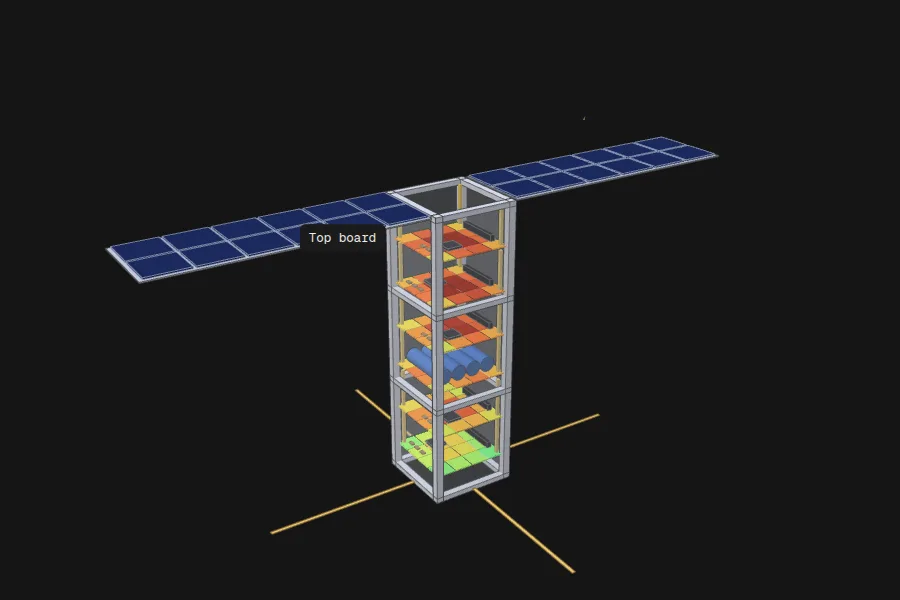
Build me a 3U CubeSat: an aluminium frame, six boards inside with the battery pack in the middle, solar cells on two sides, two deployable wings and a UHF antenna. Then put it in the cosmic rays at 1 AU and tell me which board takes the most dose.

Not connected to Phydras: plug me in and I can build it.

  1. set_parametersu = 100 mm · rail = 8.5 mm
  2. apply_scene_editsframe · 4 rails, 4 rings · Al 6061
  3. apply_scene_edits6 boards · FR-4 · array along z
  4. apply_scene_editsbattery · 4 × 18650 · UHF whips
  5. apply_scene_editssolar cells · 2 wings, deployed
  6. check_overlapsnone
  7. import_radiation_spectrumGCR · 1 AU
  8. start_simulationasked you first · 2 M primaries
  9. show_result_mapdose on the boards
Built and checked, no overlaps. The top board, under the open end, takes the most dose; the map is open in Phydras.
Phydras · cubesat.geantcad
  • Claude
  • ChatGPT
  • Codex
  • Gemini
  • Cursor
  • any MCP client
01 · Your model

Start from what you have.

A STEP from Fusion, SolidWorks or Onshape, a GDML, an STL, or a model drawn here. Imported meshes become exact boxes, tubes and prisms where they can.

02 · Materials and sources

Say what it is, and what hits it.

NIST and optical materials or your own mixtures; beams, point and area sources, radioactive ions, spectra and cosmic rays at any place and date.

03 · The physics

See it work in seconds.

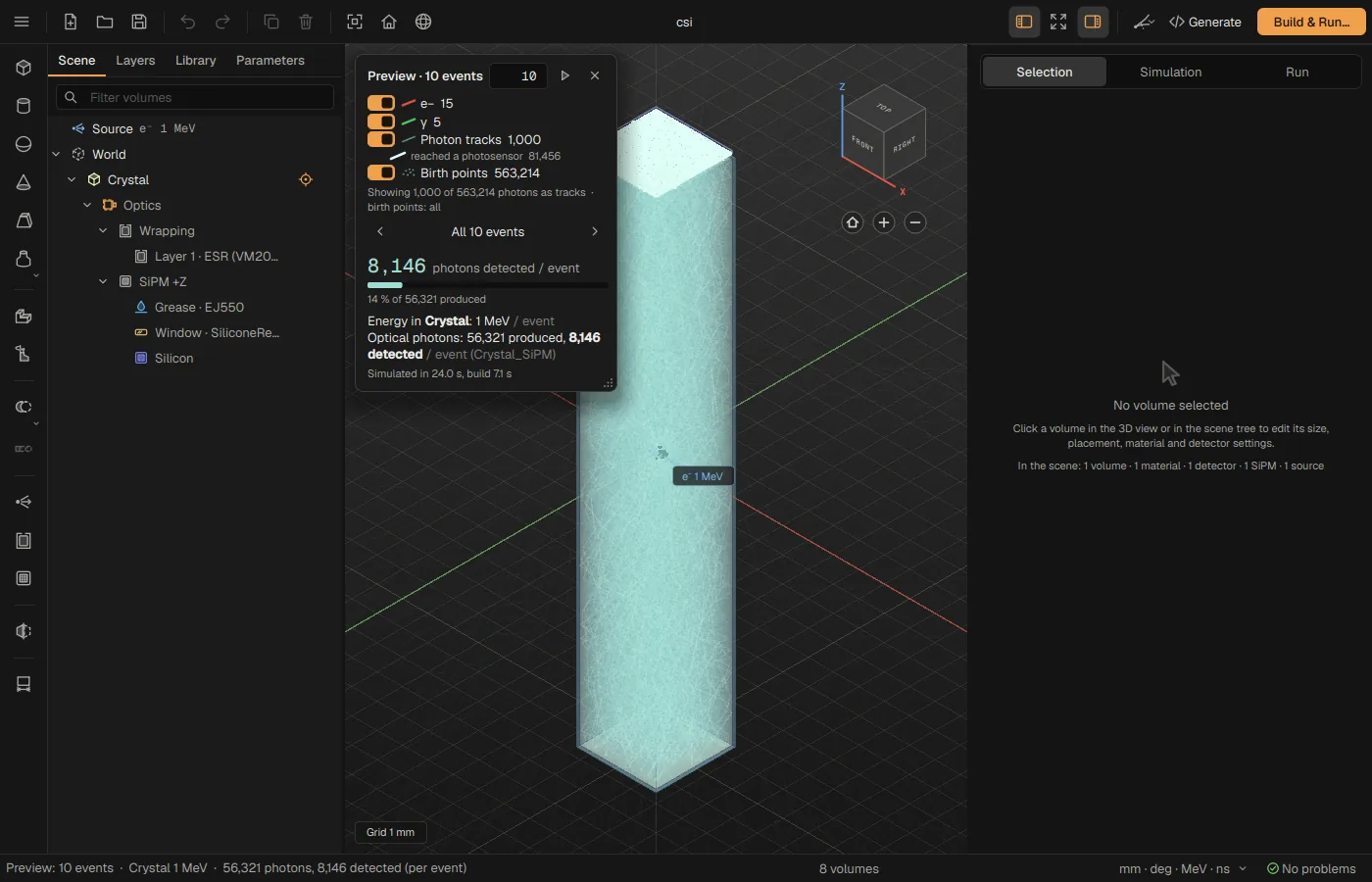
Physics lists, wrapping and sensors with the mouse, checks as you go, and a preview of real events drawn over the model before you run anything.

04 · The results

Read what it found.

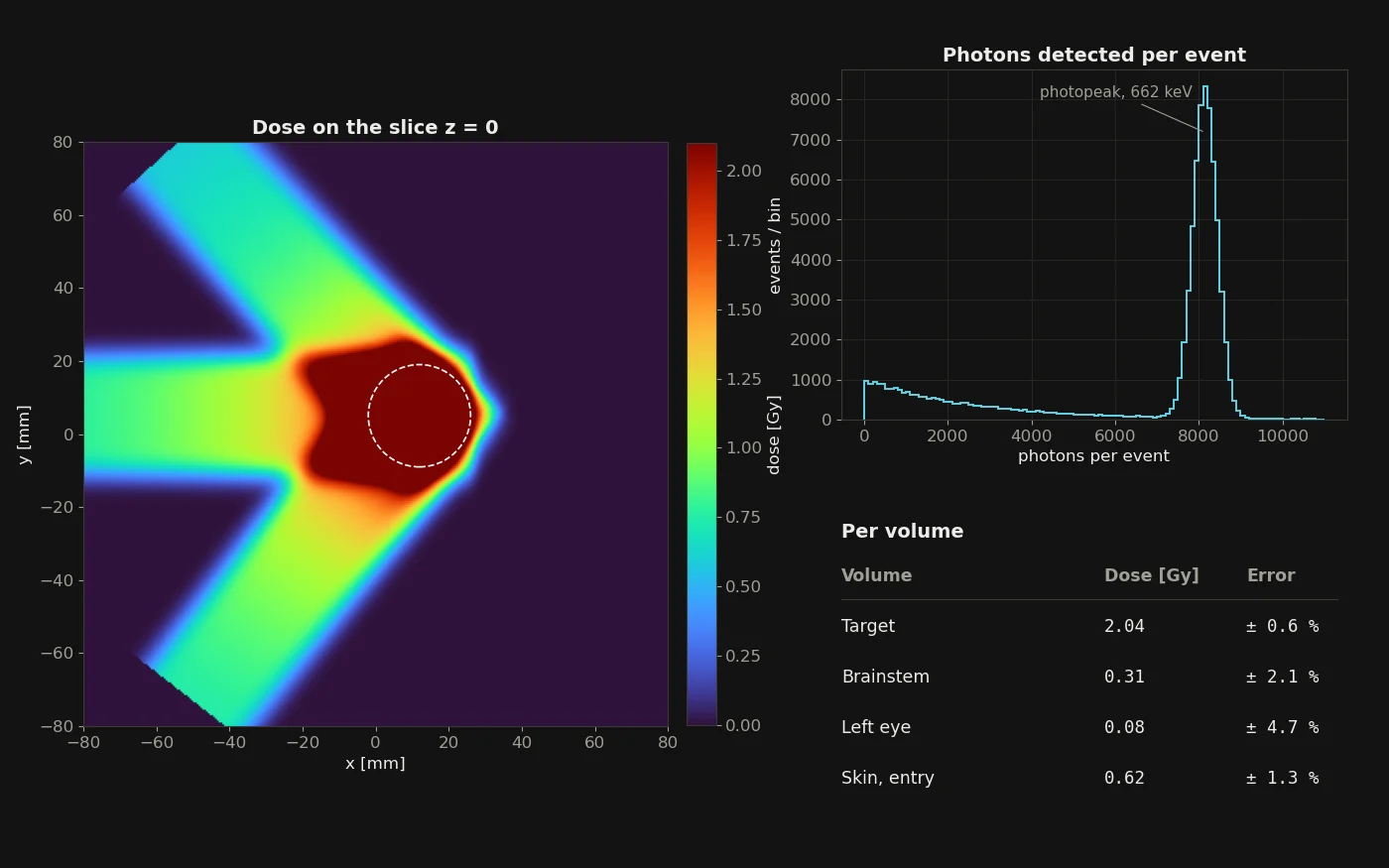
Energy, dose and fluence painted on the volumes with their errors, scans of any parameter, ROOT or CSV, and a report with the plots.
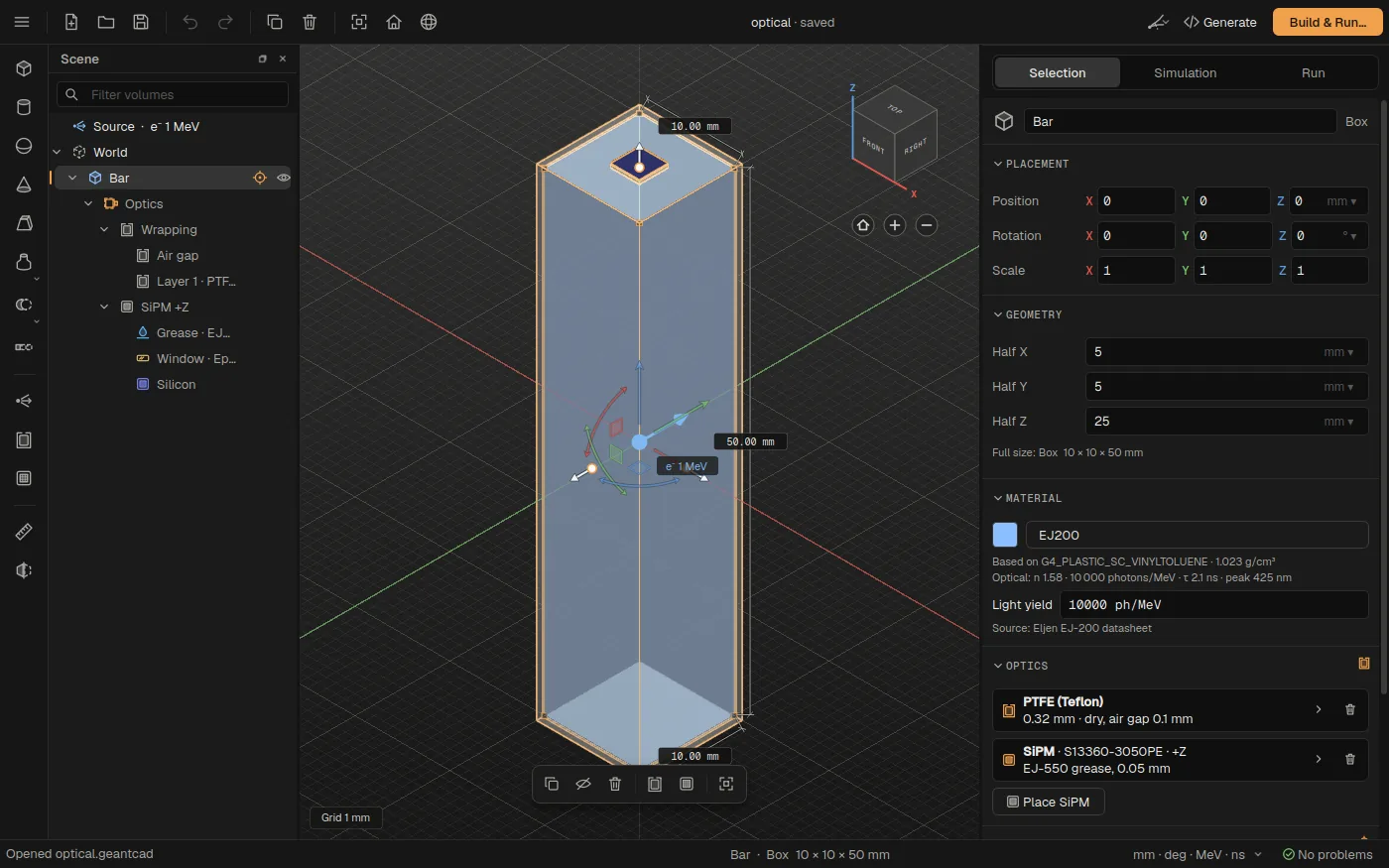
The editor: a scintillator bar with its wrapping and SiPM, the scene tree and the properties
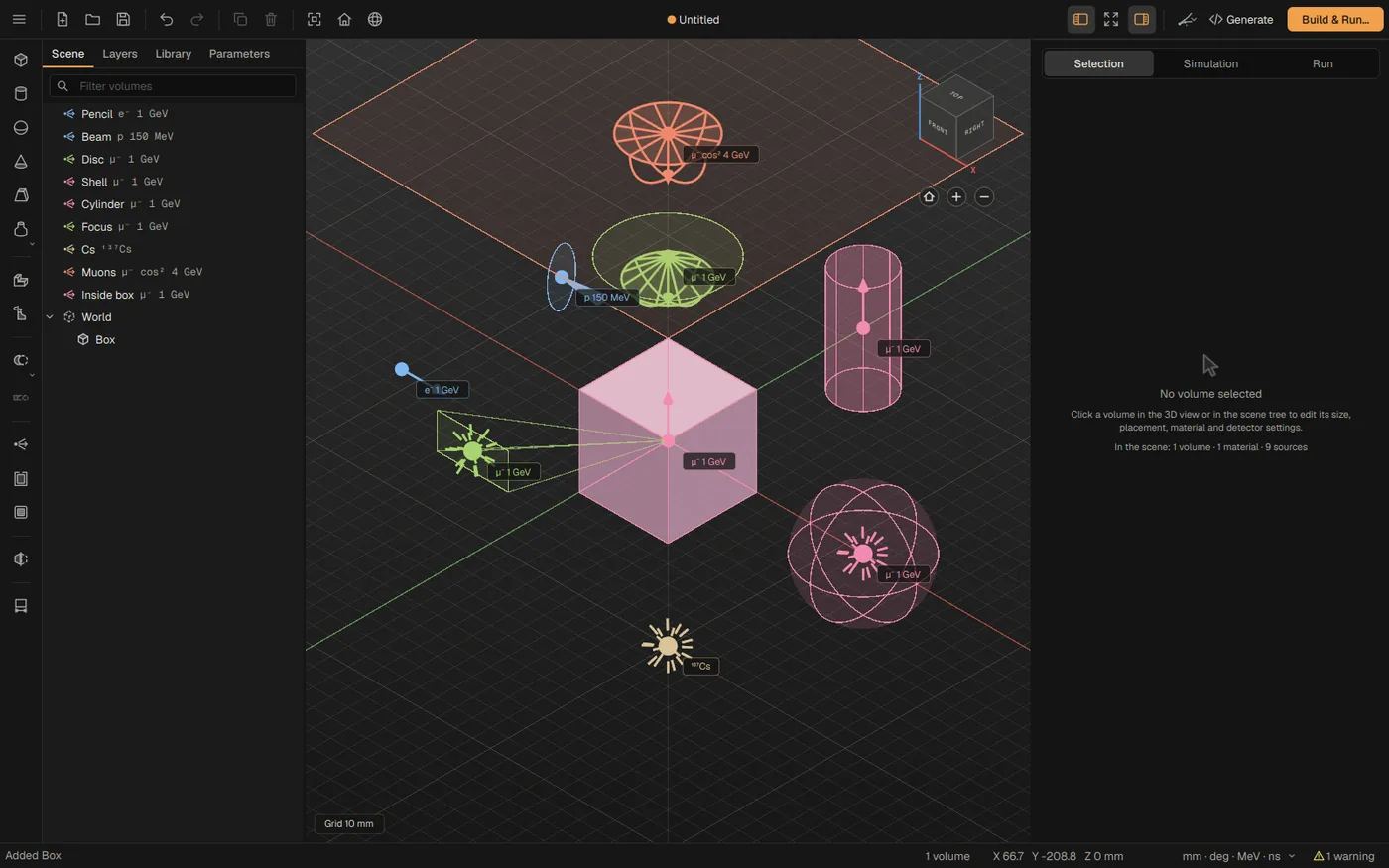
Several kinds of particle source in one scene
Ten events in a CsI(Tl) crystal: particle tracks and optical photons over the model
What a run gives back: a dose map on a slice, the photons per event as a histogram, and the dose per volume with its error
ImportSTEP · GDML · STL · OBJmeshes turn into exact solids
BuildSketch, extrude, booleanarrays, copies, assemblies
ParametersSizes you can typeexpressions that update the model
MaterialsNIST and opticalcatalogues, and your own mixtures
SourcesGPS · ions · spectracosmic rays at any place and date
VolumesDetectors and scorerson any solid, with a click
PhysicsReference listsFTFP_BERT, QGSP_BIC, Shielding, optics
OpticsWrapping and SiPMsreal sheets, 45 sensor models
ChecksOverlaps, problemsflagged as you go, before you run
MapsDose, energy, fluenceon the volumes, with their errors
ScansA parameter, A to Bone run per point, compared
OutputROOT · CSV · reportthe plots written for you
The engine

Powered by Geant4.

Every run is Geant4: the toolkit trusted for over twenty-five years, from the LHC to radiotherapy and spaceflight. Phydras builds the model and writes the project; Geant4 tracks every particle through it, step by step, with its own physics and data.

  • Geant4 11
  • FTFP_BERT · QGSP_BIC · Shielding
  • optical physics
  • multithreaded
Your Geant4 project

Take away the code.

A Geant4 project in CMake and C++ that builds without Phydras, ROOT or CSV output, a report with the plots. Your own code in the marked regions survives every regeneration.

  • CMake · C++
  • ROOT · CSV
  • report
  • yours to keep
your model inhits, dose, light out
DetectorConstruction.cc · generated, then yours
// src/DetectorConstruction.cc · generated, then yours (abridged) G4VPhysicalVolume* DetectorConstruction::Construct() { Materials::Define(); parser_.Read(gdmlFile_, false); G4VPhysicalVolume* world = parser_.GetWorldVolume(); // ==== USER CODE BEGIN Construct // your own code: kept at every regeneration // ==== USER CODE END Construct return world; } $ cmake -S . -B build && cmake --build build $ cd build && ./detector macros/run.mac -t 4 # ROOT or CSV, then the report
Public beta

Free for research and teaching.

  • Linux now, Windows through WSL, macOS later.
  • Register in the app when it first opens; a key lasts three months and renews while the beta goes on.
  • The projects you generate are yours, with no licence check in them.
Tell Me When It Opens beta@phydras.com